



The metals and mining industry sits at the centre of the global energy transition and technology boom, fuelled by artificial intelligence (AI), supplying the raw materials needed for batteries, renewable energy infrastructure, electrification projects and data centre hyper-scaling. At the same time, operators face increasing pressure to improve productivity, reduce environmental impact and maintain high safety standards. Meeting these objectives depends on access to reliable operational data. However, mining is one of the most challenging industries to instrument effectively. Mine sites are geographically dispersed, assets are often located in remote areas and harsh process conditions can quickly compromise conventional measurement technologies.
Advances in wireless communications, condition monitoring and sensing technologies are helping operators overcome these barriers. By extending measurement into previously under-monitored areas, companies are gaining greater visibility into equipment conditions, process performance and resource utilisation, enabling better operational decision-making and more efficient use of resources.
Protecting critical equipment
Equipment reliability is one of the biggest opportunities for improvement in the industry. Conveyor systems can stretch for kilometres, making routine inspections time-consuming and potentially hazardous. Seized rollers, deteriorating bearings and overheated pulleys can quickly escalate into belt damage, fires and costly production interruptions.
Wireless condition monitoring technologies, such as the Rosemount 848T wireless temperature transmitter and AMS wireless vibration monitor from Emerson, allow maintenance teams to identify developing mechanical issues before they result in failures, enabling repairs to be scheduled during planned outages rather than emergency shutdowns. Conveyor systems are also prone to transfer point blockages at chutes. Emerson level sensors can be installed and configured to stop material conveyance once plugged chutes are detected, an important mechanism to prevent conveyor head pulleys from being damaged.
Similar benefits can be found in crushing and grinding circuits. Primary crushers operate most efficiently within a defined throughput window, making accurate level measurement essential. Non-contacting radar technologies, such as the Rosemount 5408 level transmitter, provide reliable measurements despite dust, vibration and changing ore profiles, helping operators maintain stable feed conditions and identify developing blockages. In grinding circuits, pressure, temperature, level and flow measurements verify lubrication system performance, while vibration monitoring provides early warning of bearing and drive train problems that could otherwise result in lengthy outages.

Improving process performance
As crushed ore moves into flotation and recovery circuits, measurement challenges become increasingly complex. Maintaining stable operating conditions is critical to maximising recovery, but abrasive ore slurries, varying solids concentrations and demanding process chemistry can make reliable measurement difficult.
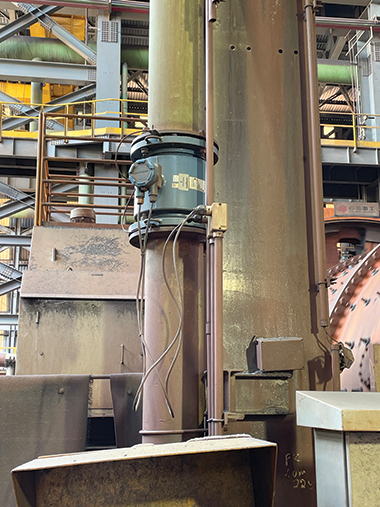
Flow measurement is a good example. Slurry transport through pipes accelerates wear and generates significant process noise, making technology selection critical. Magnetic flow meters are often preferred because they contain no moving parts and introduce no obstruction into the flow path. Instruments such as the Rosemount MS magnetic sensor and Rosemount 8782 slurry transmitter are specifically designed for these demanding applications, providing reliable measurements while minimising maintenance requirements.
Compressed air distribution systems present another challenge. Sparger blockages and piping leaks can gradually reduce flotation performance without obvious indications elsewhere in the process. Rosemount wireless pressure gauges allow operators to continuously monitor sparger performance and receive early warning of developing restrictions or leaks. Process chemistry is equally important and sensors, such as the Rosemount 396P pH/ORP, are designed to withstand high-solids applications while resisting coating and fouling, helping maintain measurement reliability and process stability.
Extending visibility beyond the plant
Tailings and water management systems are becoming increasingly instrumented as operators seek to improve sustainability and risk management. Tailings facilities require continuous visibility into pond levels, slurry distribution and embankment conditions, often across large and remote areas. The Rosemount 3051S wireless submersible DP transmitter can be used to monitor pore water pressure within embankments, while non-contacting radar level measurement provides continuous visibility into pond level conditions. Together, these measurements support safer operation and help operators identify changing conditions before they become significant concerns.
Water stewardship has also become a major focus across the mining industry. Understanding where water is being used, how much is being consumed and where recovery opportunities exist, requires far greater measurement coverage than many sites have traditionally deployed. Clamp-on ultrasonic flow meters, such as the Flexim FLUXUS 721, make it practical to add flow measurement points without process interruption or pipe intrusions. Combined with level instrumentation and conductivity measurements using devices such as the Rosemount 228 toroidal conductivity sensor and Rosemount 1056 transmitter, operators gain the information needed to improve water recovery, reduce freshwater consumption and support sustainability objectives.
View Emerson's podcast explaining in more depth about its level measurement solutions for the mining industry, visit https://youtu.be/Zx8muO5uU3o
Listen to the audio version, visit https://tinyurl.com/3af6wsvy
For more information contact Emerson,
| Tel: | +27 11 451 3700 |
| Fax: | +27 451 3800 |
| Email: | [email protected] |
| www: | www.emerson.com |
| Articles: | More information and articles about Emerson Automation Solutions |






© Technews Publishing (Pty) Ltd | All Rights Reserved
 printer friendly version