




The solid-state battery (SSB) industry is transforming, driven by advanced technologies and rising demand across applications. Offering breakthroughs in safety and energy density, SSBs could reach a US$10 billion market by 2036. The IDTechEx report for 2026-2036 provides a comprehensive analysis of this dynamic industry, exploring the interplay between cutting-edge technologies, market trends, manufacturing challenges, and the global ecosystem surrounding solid-state batteries.
A technological leap
SSBs replace liquid electrolytes with solid materials, enhancing safety by reducing thermal runaway risks and increasing energy density through lithium metal or silicon anodes. This shift enables lighter, more compact designs. SSB development focuses on three electrolyte types: sulphides offer high ionic conductivity but face toxicity and manufacturing challenges; polymers are scalable but require higher temperatures and have stability issues; and oxides provide excellent stability for lithium metal anodes but suffer from high interface resistance and costs. Each technology involves trade-offs in performance, cost and scalability, with the report detailing their strengths and limitations.
Pushing boundaries
The rapid growth of the electrical vehicle market has been a key driver of battery innovation. While lithium-ion batteries have dominated the market since their commercialisation in 1991, their limitations such as flammability risks, resource constraints and environmental concerns, have spurred interest in alternatives like solid-state batteries.
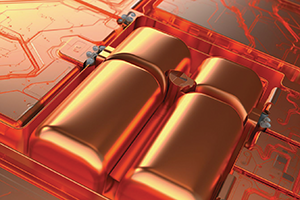
Key drivers of solid-state battery adoption
Advances in materials science and cell design have made solid-state batteries increasingly viable. Their improving performances and value propositions make them appealing as one of the next-generation battery technologies.
In addition, the electrification of transportation and the need for sustainable energy storage solutions require safer batteries with higher energy density, which can be operated in harsher environments. The shift toward localised manufacturing in regions like Europe and North America is also reshaping global battery production dynamics.
While solid-state batteries are often viewed as a potential replacement for lithium-ion technology, debates persist about their readiness for commercialisation. Some see them as overhyped due to their current high costs and manufacturing challenges. Others believe they hold the key to overcoming critical limitations in existing battery technologies.
Global ecosystem and regional trends
The development of solid-state batteries is a collaborative global effort involving research institutes, material suppliers, battery manufacturers, automotive OEMs and investors, with regional dynamics significantly shaping the industry. East Asia, led by Japan, South Korea and China, continues to dominate in battery innovation and production capacity, while North America and Europe are heavily investing in localised manufacturing to reduce dependence on East Asia. Meanwhile, emerging markets are contributing innovative approaches to materials and systems, further reshuffling the supply chain. This shift highlights the need for adaptable manufacturing processes that can integrate new materials and components while maintaining cost efficiency, reflecting broader trends driving the industry’s evolution.
Challenges and opportunities
SSBs represent a transformative advancement in energy storage, offering improved safety, higher energy density and simplified designs compared to traditional lithium-ion batteries. By replacing flammable liquid electrolytes with solid materials, SSBs significantly reduce fire risks and enable safer operation at higher temperatures. Their use of lithium-metal anodes allows for greater energy density, enabling longer EV ranges and more compact designs. SSBs also promise faster charging and longer lifespans, making them ideal for EVs and renewable energy storage systems.
However, widespread commercialisation faces significant hurdles. Manufacturing processes are complex and not yet scalable, leading to high costs. Precision engineering is required to develop high-quality, easily manufactured components and ensure seamless integration. Safety challenges, such as lithium dendrite formation, can cause short circuits while performance limitations at low temperatures and reduced cycle life under fast charging require further improvement. Additionally, recycling and end-of-life management remain unresolved due to the unique materials used.
Despite these challenges, ongoing progress in pilot production lines and gigafactories, alongside research to reduce costs and enhance performance, positions SSBs as a key technology for sustainable energy storage and transportation.
Recent focus areas
The transition from laboratory-scale development to commercial-scale production in battery technology has shifted the focus from individual cell development to system-level integration. This includes optimising the performance of individual cells and also ensuring their seamless incorporation into battery packs and systems. By prioritising system-level optimisation, manufacturers aim to deliver solutions that meet the complex demands of large-scale applications like electric vehicles and grid storage.
Another key focus area is addressing the challenges of cost reduction and scalability as production expands. Efforts are being made to streamline manufacturing processes and develop scalable designs that maintain performance while reducing costs. These advancements reflect the industry’s commitment to overcoming technical and economic barriers while enabling the widespread adoption of advanced battery technologies.
For more information contact IDTechEx,






© Technews Publishing (Pty) Ltd | All Rights Reserved
 printer friendly version