




In the world of engineering, there’s a constant drive to get more out of existing equipment. Those working with hydraulic or pneumatic systems know that keeping your machinery running at peak performance balances productivity and cost. As systems age, they often become less efficient, requiring more energy and more frequent repairs. The good news is that you don’t always need to invest in an entirely new machine to solve these problems. Hydraulic system upgrades offer a smart, strategic way to revitalise your equipment, enhance its capabilities and significantly reduce long-term operational costs.
This leads to calculated improvements that pay for themselves over time. By targeting specific components and introducing modern technology, you can turn a dated system into a high-performance asset. This article guides you through the key areas where upgrades make the most impact, helping you make informed decisions that will benefit your bottom line.
Why consider hydraulic system upgrades?
Before we dive into the ‘what’, let’s talk about the ‘why’. You might be thinking that a functioning system doesn’t need to be touched. However, a system that’s merely working might be quietly costing you a fortune. Older components can be inefficient, wasting a surprising amount of energy through heat generation and unnecessary pressure. This energy waste translates directly to higher power bills and increased wear on your system’s components, leading to more frequent breakdowns. By proactively pursuing hydraulic system upgrades, you can achieve a range of benefits such as:
• Improved energy efficiency: Modern components, like load sensing pumps and variable speed drives, can drastically cut down on power consumption by only providing the exact amount of flow and pressure needed at any given moment.
• Enhanced reliability: Replacing worn-out parts before they fail can prevent costly, unexpected downtime. A
• Reduced maintenance costs: New materials and designs in components like seals and hoses can extend their lifespan, meaning fewer replacements and less time spent on repairs.
• Increased productivity and control: Upgrading to advanced proportional or servo valves and modern control systems allows for finer control over movements, resulting in a higher quality product and faster cycle times.
In essence, these upgrades are an investment in your equipment’s future, helping you save money and improve performance simultaneously. Upgrading a hydraulic system doesn’t mean gutting the entire machine. Often, the most significant gains come from focusing on a few key areas.

Pumps and power units
The pump is the heart of any hydraulic system. If you’re still using a fixed displacement pump in an application with variable load cycles, you’re likely wasting a considerable amount of energy. Modern variable displacement pumps can adjust their output to match the system’s demand, which is far more efficient.
Upgrading the entire power unit can also be a game changer. For example, integrating a variable speed drive with a fixed pump allows the motor to slow down during low-demand periods, saving energy and reducing noise. This type of upgrade is one of the quickest ways to see a return on your investment.
Valves and control systems
Precision is paramount in modern applications, and outdated control valves can be a bottleneck. If your system requires precise speed or position control, upgrading from a simple on/off valve to a proportional or servo valve is the answer. These valves allow for a continuous range of control, which is essential for tasks like robotic automation or fine-tuning material handling.
Upgrading the electronic controls provides operators with better diagnostics, remote monitoring capabilities, and the ability to program complex motion profiles that would be impossible with older technology.
Filtration and fluid management
Contamination is the silent killer of hydraulic systems. Over time, even with a basic filter, tiny particles and moisture can build up in the fluid, leading to accelerated wear on pumps, motors and valves.
One of the most effective hydraulic system upgrades you can make is to improve your filtration. By installing a finer, more efficient oil filtration system, you can extend the life of your hydraulic fluid and all the components it touches. Regular fluid analysis in conjunction with an upgraded filtration system will help you catch problems early and save you from the high cost of a complete system failure.
Cylinders, seals and hoses
Even the most robust cylinders can eventually wear down. Upgrading to cylinders with more advanced sealing technology or higher-quality materials can improve their longevity and performance. Similarly, replacing old hoses with modern,
For applications requiring extreme durability, a hard chrome coating on cylinder rods is a popular upgrade. CT Hydraulics services include chroming, which provides a hard, corrosion-resistant surface to enhance component lifespan and performance.
Comparing old and upgraded systems
Here is a comparison of a typical older system versus one that has undergone strategic upgrades (see table).
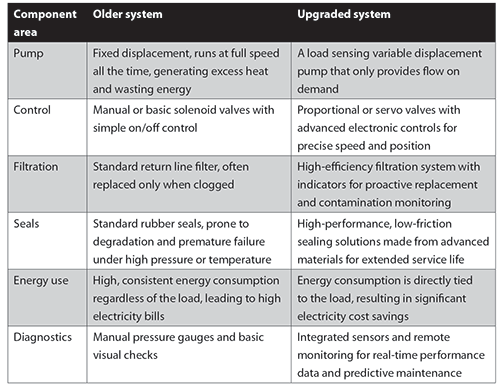
Investing in hydraulic system upgrades is a proactive strategy that offers significant returns. It doesn’t just repair a broken part, it improves the entire system’s efficiency, reliability and lifespan. By partnering with a company that understands both the old and new technologies, you can ensure a seamless transition and maximum benefit.
CT Hydraulics offers a wide range of components and services to help you modernise your machinery. From high-quality hydraulic motors and pumps to advanced oil filtration systems, our product range is designed to boost your system’s performance, while our expert engineers can help with the design and planning of your next upgrade.
For more information contact CT Hydraulics,
| Tel: | +27 11 873 2342 |
| Email: | [email protected] |
| www: | www.cthydraulics.co.za |
| Articles: | More information and articles about CT Hydraulics (Nqoba) |






© Technews Publishing (Pty) Ltd | All Rights Reserved
 printer friendly version